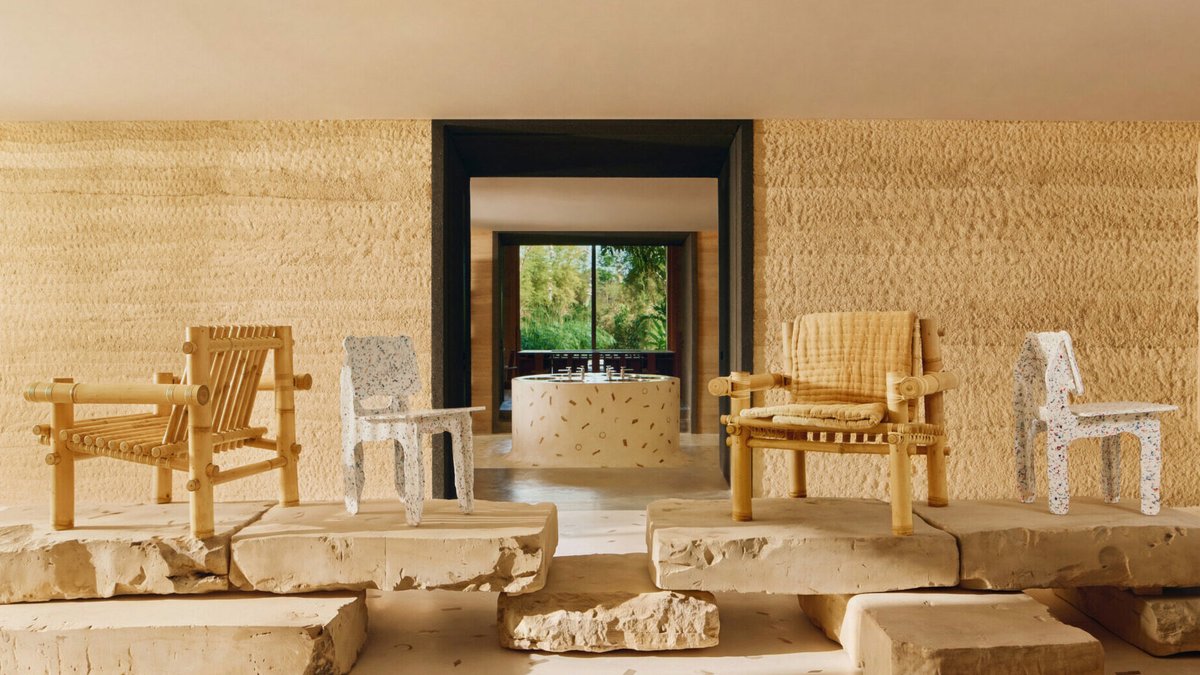
A retail store in Bali is redefining shopping by turning the act of purchasing into an exploration of craft and material reuse. Unlike traditional stores, it prioritizes engagement with materials and processes over product display.
David Gianotten, managing partner at OMA, describes the approach as shifting focus from consumption to discovery. The architecture blends modern design with Balinese techniques, using locally sourced materials like alang-alang grass for the façade and rammed-earth walls for the interior. Bamboo appears in flooring and display elements, while reclaimed materials, including waste plastic, are integrated into the structure.
The store’s layout guides visitors through five interconnected bays, each revealing different layers of production. The first two showcase Indonesian-made souvenirs and Potato Head’s apparel line, while the third presents Wasted by Potato Head, a collaboration with British designer Max Lamb that turns discarded materials into furniture and home goods. The final two bays move beyond observation into participation: a natural dye studio uses food and plant waste for pigments, and The Workshop features a wall of shredded HDPE plastic collected from waste streams in Bali and Java. Visitors can experiment with dyeing, painting, and repurposing materials on-site.
Read Also: Eureka Ergonomic Launches Canvas Wall System for Homes
This hands-on approach reflects a broader shift in how OMA and Potato Head view sustainability. The store connects to Desa Potato Head’s Waste Lab and Follow the Waste Tour, which demonstrate how discarded materials can be recovered and transformed. The design process itself adapted to material inconsistencies, adopting natural variations rather than enforcing uniformity. Ade Herkarisma, Potato Head’s group head of architecture, notes that circularity extends beyond material selection; it requires rethinking design, construction, and how people interact with resources.
The project echoes themes explored in OMA’s 2022 N*thing is Possible exhibition in Singapore, which examined zero-waste hospitality. Here, circularity becomes tangible through architecture and interaction. By making visible the lifecycle of products, from raw materials to waste repurposing, the store challenges conventional retail by inviting customers to question not just what they buy, but how it’s made and what it could become.



Leave a Reply