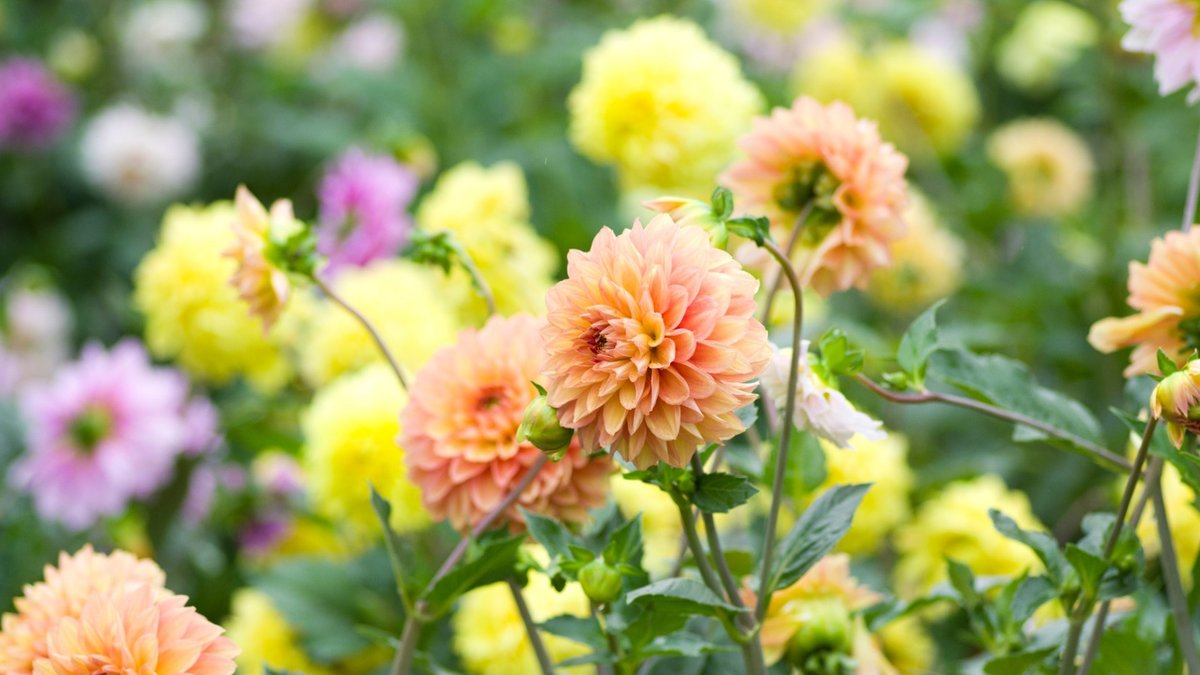
August offers a busy window for gardeners to maintain the abundance of fresh produce filling their plots, as regular picking is necessary to keep unruly growth in check. Summer fruit pruning for espaliers, fans, cordons, and step-overs is also high on the priority list. While it may feel like the lazy month of summer, there is plenty to do before the season ends. Perennials also need a firm hand to continue blooming into autumn, requiring the removal of dead flowers to redirect energy toward fresh buds.
Removing spent blooms prevents plants from directing energy into producing seed and encourages them to produce fresh buds. Doing this once a week is a good rhythm to get into during the height of summer. For roses, cut just above the first healthy leaf, around 5mm above the bud. Dahlias produce flower buds near to old blooms, so be precise with plant snips to remove only the faded flower and its stem. Cosmos can be cut back to the first healthy leaves below the spent flower, while coreopsis flowers can be individually removed or the entire faded stem clipped to fresh growth. Geraniums require removing the entire flower stalk where it joins the main stem.
Related: Top pruners put to the test
It is wise to leave the seed heads of echinacea, rudbeckia, teasels, and ornamental grasses alone, as these provide a vital food source for attracting birds to the garden and add seasonal interest through winter.
Timing is critical for watering plants during a heatwave. The most effective method is to wait for cooler morning temperatures, allowing moisture to soak into the soil before the day heats up. This gives foliage plenty of time to dry and ensures plants have enough moisture available to cope with the hottest part of the day. It is imperative to avoid the middle of a hot afternoon entirely, as most of the moisture will be lost to evaporation before it reaches the roots. If a morning is missed, evening watering is acceptable, though it is wise to avoid leaving foliage damp overnight to discourage fungal diseases and pests.
Many flowering plants have expended most of the nutrients in the soil by August, making regular feeding essential to replenish reserves for stronger stems and healthier foliage. Container-grown plants can be particularly hungry, as frequent watering washes out nutrients faster than in garden borders. Continue to feed roses, dahlias, cosmos, petunias, fuchsias, pelargoniums, begonias, and salvias every one to two weeks with a high-potash liquid fertiliser. Removing spent flowers before feeding helps direct nutrients toward fresh buds rather than developing seed.
Related: Teatime just got a little sweeter
August is the perfect time to enjoy the fruits of your harvest, and regular picking encourages vegetables to keep cropping for longer. If a mature vegetable is left on the plant, it signals that no further flowering or fruiting is needed. Courgettes should be harvested when glossy and their flesh is tender, typically between 15-20cm. Runner beans and French beans are ready when the pods are smooth and snap easily; leaving them too long can result in tough, stringy vegetables with lost flavour. Tomatoes should be picked as soon as they develop full colour and feel slightly soft, though they can finish ripening on a sunny windowsill. Peppers and chillies can be picked slightly green for flavour, but leaving them to ripen increases sweetness or spice complexity. Salad crops are best harvested little and often by picking the outer leaves of lettuce, spinach, and rocket, allowing the plant to regenerate.
There is still time to sow vegetables for autumn and winter harvests, as the warm soil and long daylight hours allow seeds to establish quickly. Choose fast-growing salad leaves like rocket, mustard greens, or lamb’s lettuce, sowing in small batches every couple of weeks to ensure a continuous supply. Root crops, including winter radishes, turnips, and baby carrots, also thrive now. Harvesting your own seed is an economical way to safeguard perennials against winter loss and create new plants for the garden. Seeds are best gathered at their driest from midday to late afternoon on a bright sunny day, once the seed capsules are brown and papery and dry inside. Once cleaned and dried, seeds can be stored in closed, labelled brown paper envelopes in a cool, dark environment.
Related: What your dreams really mean
Planting autumn bulbs now allows them to establish roots while the soil is still warm. Autumn crocus produces goblet-shaped flowers in lilac, white, and pink by September, while Nerines offer pink shades that will flower well into October. Most autumn flowering bulbs prefer a sunny, well-drained position and should be planted at about two to three times their own height using a bulb-planter. It can be tempting to plant spring bulbs like daffodils early, but they are better left for later in the year when the soil is cooler.
For established lawns, routine watering is not imperative. Letting the grass search for its own water encourages roots to go deeper, which benefits long-term health. Water thoroughly and less frequently when possible, following any local regulations regarding hosepipes. If watering is necessary, early morning or evening is best to reduce evaporation. An established lawn is happy to go brown during dry conditions and will return to green when rain returns. If the lawn has been severely stressed, aeration to relieve compaction or scarification to reduce thatch buildup may be necessary to allow water to percolate into the soil more effectively.





Leave a Reply