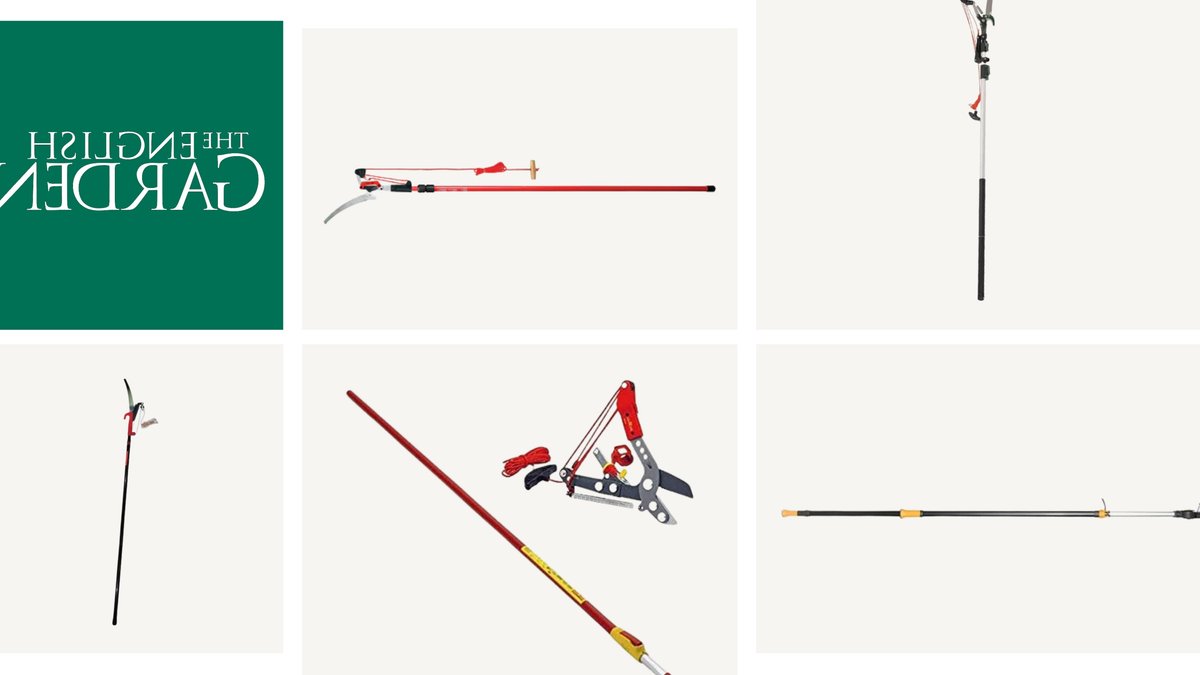
Every year, gardeners and homeowners climb trees or balance on stepladders to prune branches, risking falls and injuries. Long-handled tree pruners provide a safer alternative, allowing users to cut growth from the ground while standing on solid footing. Modern versions are lighter and more efficient than the heavy steel models of the past, featuring aluminum or composite shafts and improved cutting mechanisms.
How tree pruners work
Long-handled pruners come in two main types: those with an internal operating mechanism and those with a cord-pulley system. Internal models use a sliding collar or chain to operate the blade, avoiding external cords that can snag on branches. Many include a pull toggle at the base, letting users extend their reach by holding the pruner higher.
Cord-pulley pruners multiply cutting force through pulleys. A quad-pulley system can reduce the effort needed by up to 75%, as noted by manufacturers. Some models also feature geared blades for additional power. Most pulley pruners include a detachable saw for thicker branches, with curved saws generally performing better than straight ones.
Related: Teatime just got a little sweeter
Adjustable cutting heads help users reach awkward branches. Telescopic pruners offer more flexibility than fixed-length models, though they tend to be heavier, which can cause fatigue during extended use.
Key features to consider
Most tree pruners use bypass blades, which make clean cuts ideal for live or green growth. Anvil blades, designed for dead wood, can handle thicker branches but are less common. Weight also plays a role—lighter models are easier to maneuver, especially when working overhead.
Comfortable hand grips and cord traps prevent tangles and reduce fatigue. A secure grip is particularly important for pulley models, where consistent pulling force is necessary. Some pruners include cable guides to keep the cord aligned with the shaft.
For those needing to cut higher branches, reach becomes critical. Fixed-length pruners typically cut up to 1.5–2.4 meters high, plus the user’s arm reach. Telescopic models can extend much farther, though their added weight may make them harder to control.
Related: Bankston and For Scale Argue for Touch in Two Cities
Choosing the right pruner depends on the task. A gardener with a small orchard may prioritize reach and cutting power, while someone trimming a single overgrown shrub could use a lighter, simpler model. The best tool matches the job, not just the specifications.
Tested models and performance
The Corona TP 4210 DualLink stood out for its reach and cutting ability. With a fibreglass shaft and a dual-pulley system, it easily handled branches up to 2.5 cm thick. Its detachable saw cut branches up to 17.5 cm in diameter.
The Wilkinson Sword 25mm Telescopic Tree Cutter featured a coated aluminum shaft and a non-stick bypass blade. The quad-pulley system worked well, but the pull cord was less durable than others. It included a 31 cm curved saw, though the saw’s performance was average.
The Fiskars PowerGearX Telescopic Tree Pruner used a three-times gear transmission for effortless cutting. Its bypass blade had a PTFE coating to reduce friction, and the cutting head adjusted up to 230 degrees. The aluminum shaft locked at any height, and the SoftGrip handle improved comfort. A saw is available separately.
Related: Japanese restraint meets colour in Surry Hills terrace
The Wolf-Garten Bypass Tree Lopper RR200 was the top internal-mechanism pruner. Its bypass blade had a non-stick coating and adjusted up to 225 degrees. The aluminum shaft had six height-locking positions, and dual cutting modes—high-speed for thin branches and high-performance for thicker ones—added versatility.
For branches thicker than 2.5 cm, a pruning saw becomes necessary. The Draper folding pruning saw and Wilkinson Sword Turbo folding saw both handled growth over 5 cm in diameter, offering a compact alternative to bulkier tools.
When selecting a pruner, consider the specific needs of the job. Some models, like those tested, offer features that make them better suited for certain tasks. For example, adjustable heads and telescopic shafts provide flexibility, while lighter designs reduce fatigue. The right tool ensures safer and more efficient pruning.




Leave a Reply