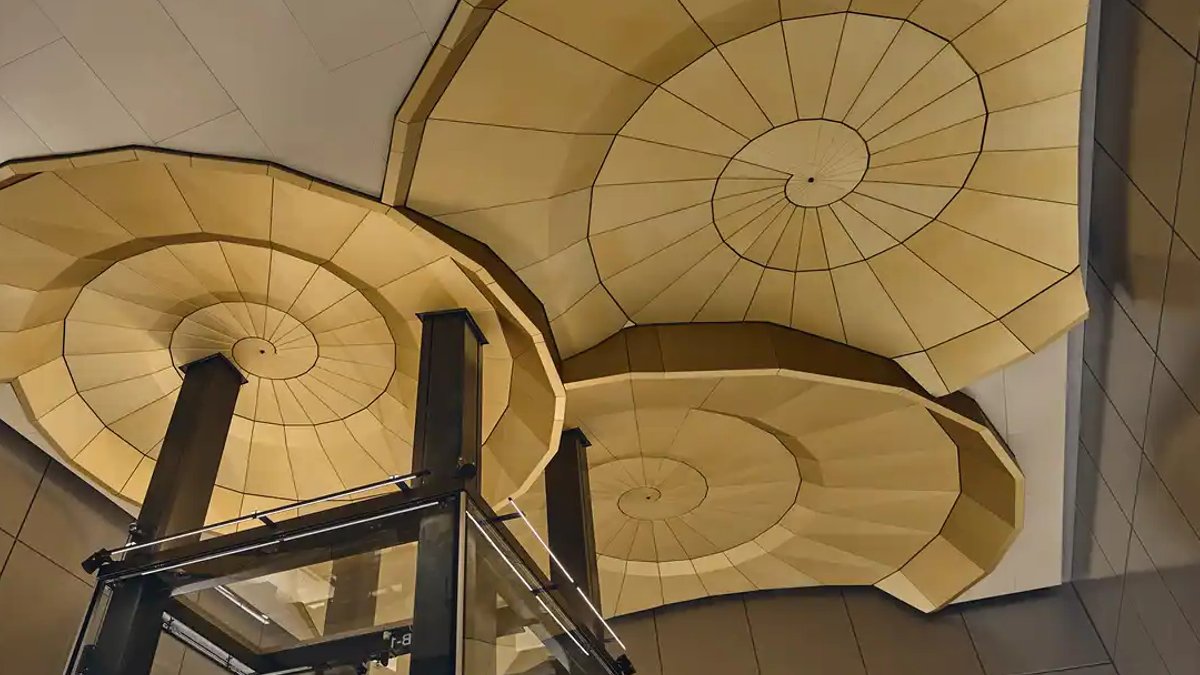
Auckland’s City Rail Link (CRL) officially opened today, completing a decade-long effort to build three new underground stations that will reshape the city’s transport network. The project, New Zealand’s largest infrastructure investment, doubles rail capacity in the city center and connects previously isolated areas to the broader system.
Three Stations, One System
The three stations—Te-Waihorotiu, Karanga-a-Hape, and Maungawhau—were designed by Grimshaw in partnership with local Māori communities and construction teams. Each station retains a unified design language while reflecting its specific cultural and urban context. A shared architectural framework, including materials, lighting, and signage, ensures consistency across the network, even as individual spaces develop distinct identities.
Te-Waihorotiu, the northernmost station, integrates artwork by Māori artist Graham Tipene, while Karanga-a-Hape features works by Reuben Kirkwood. Maungawhau incorporates designs by Tessa Harris. These elements are woven into the stations’ structure, not added as afterthoughts, ensuring cultural expression is central to the passenger experience.
Grimshaw’s involvement began in 2012, when the firm contributed to the project’s business case alongside Jasmax and Mott MacDonald. By 2019, they became the lead architect for station design under the Link Alliance model, which emphasized early contractor input to balance cost, schedule, and cultural integrity. The result is a system built for efficiency but also for lasting civic value.
A Network Built for Auckland’s Future
The CRL extends Auckland’s rail network from its former terminus at Waitematā, creating an underground line that connects to Maungawhau and beyond. With Auckland’s population expected to reach 2.3 million by 2050, the project addresses long-standing capacity constraints while improving access to jobs, education, and public services in the city center.
The stations themselves serve as gateways to expanded public space. Te-Waihorotiu, for example, links to existing parks and community facilities, while Karanga-a-Hape provides direct access to downtown Auckland. The design prioritizes accessibility, with wide platforms, clear wayfinding, and connections to walking and cycling routes.
Collaborative Design Process and Contractor Integration
The City Rail Link’s design incorporated early contractor input through the Link Alliance model, ensuring practical considerations like construction methods, material costs, and project timelines were addressed alongside architectural and cultural goals. Grimshaw and WSP coordinated across the consultant team, working directly with contractors and fabricators to refine technical systems while preserving the stations’ cultural narratives and civic quality. This approach maintained design integrity throughout the build phase, balancing efficiency with the project’s broader objectives.
Design Rooted in Place and Story
The stations’ architecture draws from Te Ao Mārama, a Māori creation narrative, to establish a visual and conceptual thread across the network. Each station’s design reflects its location’s history and environment, whether through material choices, lighting, or public art. For instance, Te-Waihorotiu’s materials reference local geology, while Karanga-a-Hape’s open design connects to the surrounding urban fabric.
A standardized kit of parts, ceilings, flooring, signage, was developed to streamline construction while allowing flexibility for local adaptation. This approach reduced costs and timelines without sacrificing the stations’ distinct character. The result is a system that feels both cohesive and uniquely Auckland.



Leave a Reply