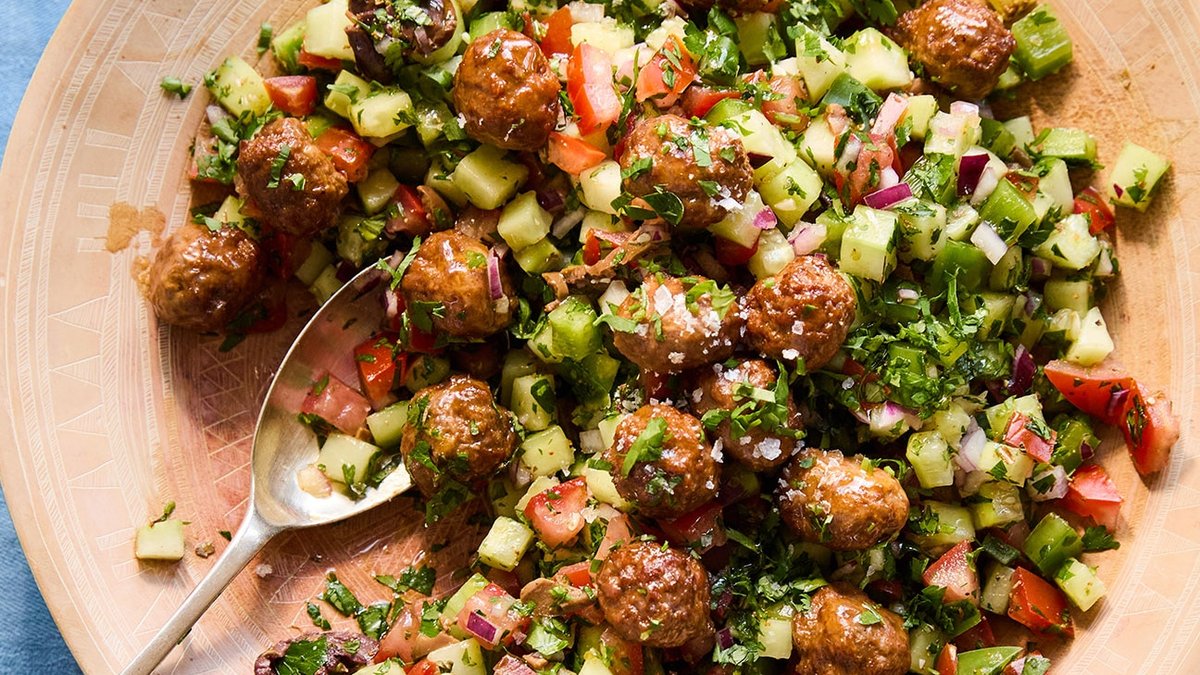
The south of France in summer carries a distinct rhythm: cicadas humming in the heat, the scent of rosé chilling in the shade, and the smoky aroma of merguez sausages sizzling over coals. This atmosphere is one of indulgence, where meals stretch into the golden hours of late afternoon, and the boundaries between cooking and conversation blur. The air itself seems to slow, thick with the warmth of the sun and the promise of shared plates. A Moroccan-inspired salad with roasted merguez meatballs captures that mood—spiced, lively, and unpretentious—because it mirrors the way food is enjoyed in the region: not as a performance, but as a natural extension of the day’s leisure.
The dish thrives on contrast, a hallmark of Mediterranean cuisine. The crisp bite of red onion and cucumber, brightened by sherry vinegar, cuts through the richness of the merguez. Tomatoes, still warm from the sun, release their juices into the salad, while the green pepper adds a subtle crunch. Ground cumin, a spice with earthy warmth, bridges the gap between the fresh vegetables and the meat, while herbes de Provence lends a floral, herbal note that is unmistakably Provençal. The black olives, briny and slightly bitter, provide punctuation, their saltiness enhancing the other flavors without overpowering them. The meatballs, roasted until their edges caramelize, develop a crust that gives way to juicy, spiced meat, a texture that invites tearing into them with fingers rather than utensils.
This is a meal designed for lingering, not rushing. The recipe’s suggestion to serve it with warm baguette and a side of Dijon mustard is more than a practical note—it’s an invitation to recreate the pace of a French countryside meal. The baguette, torn and used to scoop up bites of salad and meatball, becomes part of the experience, its crusty exterior yielding to a soft, chewy interior. The mustard, sharp and tangy, offers a counterpoint to the smokiness of the merguez, and its presence on the table encourages guests to customize their bites. There’s no rigid structure here, no prescribed order of eating. Instead, the dish unfolds organically, with flavors and textures mingling as the meal progresses.
The method itself reflects this casual elegance. Roasting the meatballs in the oven, rather than grilling them, allows the spices to bloom and the fat to render slowly, intensifying the depth of flavor. The salad comes together in stages, with the onions and cucumbers macerating in sherry vinegar to soften their sharp edges, while the tomatoes and peppers retain their freshness. The herbs, added in two batches—some mixed into the salad, others reserved for garnish—ensure their bright, aromatic qualities remain lively until the last moment. The final assembly, with the meatballs arranged atop the salad and the remaining herbs scattered over the top, is as much about presentation as it is about taste, a visual cue that the dish is ready to be enjoyed.
Adapted from Salads for all Seasons by Alexandra Stacey, the recipe embodies the book’s philosophy of seasonal, unfussy cooking. Stacey’s approach is rooted in the belief that the best meals are those that feel spontaneous, even if they’re carefully considered. The book itself is a celebration of salads as more than just side dishes—it positions them as centerpieces, capable of anchoring a meal with their balance of textures and flavors. This particular salad, with its North African influences and Provençal sensibilities, is a sign of how culinary traditions can blend seamlessly when the focus is on fresh, high-quality ingredients. There’s no need for elaborate techniques or precise measurements; the dish succeeds on the strength of its components and the way they interact.
For those who wish to expand the meal, the book offers suggestions that stay true to the Mediterranean ethos. A classic Greek salad, with its briny feta, crisp cucumbers, and ripe tomatoes, would complement the merguez meatballs without competing with them. Alternatively, a tomato-feta-pine nut dish, with its creamy, nutty richness, could add another layer of texture and flavor. But the beauty of this salad is that it doesn’t require accompaniments to feel complete. On its own, it evokes the languid afternoons of Provence, where the food is secondary only to the company. The clink of glasses, the laughter of children playing in the distance, and the hum of conversation are the true seasonings of such a meal. The dish is a vessel for memory, a way to recreate the sensory pleasures of a summer in the south of France, even if only for an evening. The key is to serve it with the same spirit in which it was made: without fuss, but with intention.




Leave a Reply