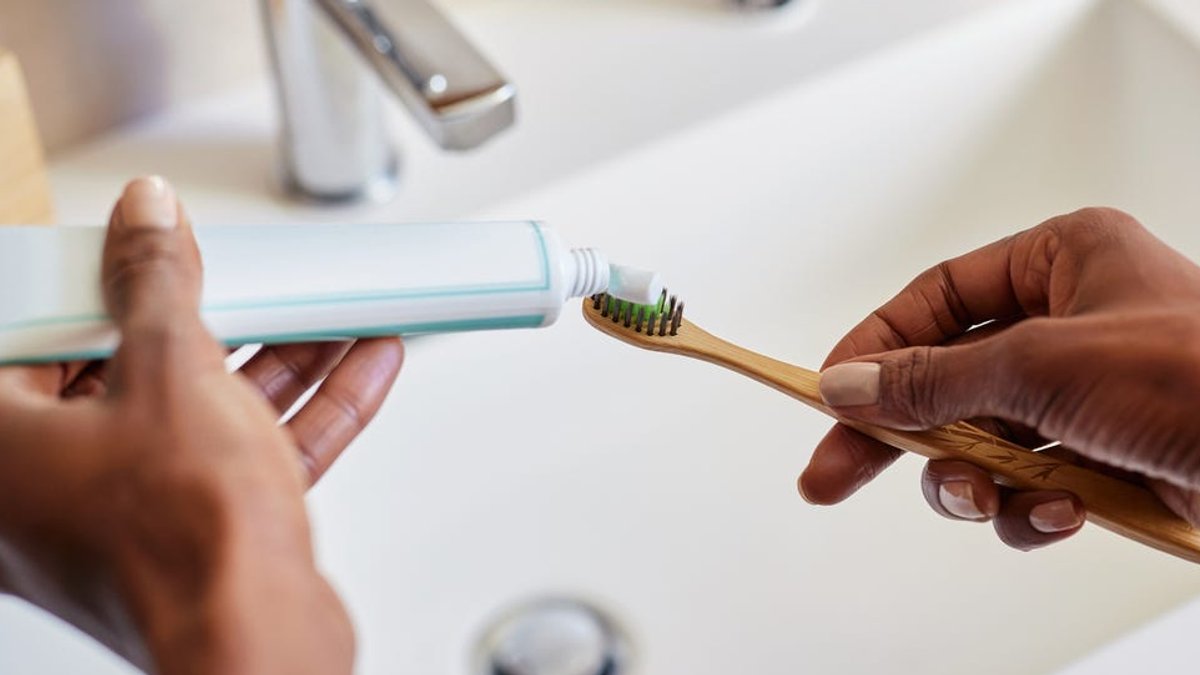
Should you brush your teeth before or after breakfast? Dentists agree that a specific time exists for this daily task. “Brushing your teeth in the morning is not just about fresh breath — it is a critical part of protecting your oral and overall health,” says Anjali Rajpal, DMD, the founder of Beverly Hills Dental Arts. In fact, growing research shows that dental health extends beyond teeth and gums. “Good oral health is intricately tied into good overall health and wellness,” says Steven J. Katz, D.D.S., M.S., the president of the American Association of Endodontists. “Brushing, flossing and regular dental visits protect not just your mouth, but your heart, lungs, brain and more.”
The Best Time to Brush in the Morning
Both dentists agreed that if you only brush once in the morning, it’s best to do it right after you wake up — before you have anything to eat. “In addition to getting rid of that horrible morning breath, it is important to brush your teeth in the morning to remove the plaque and bacteria that developed overnight,” says Dr. Katz. That’s because when you’re sleeping, your body doesn’t produce as much saliva as it does when you’re awake, so there’s no liquid in your mouth to rinse off bacteria throughout the night.
If left on your teeth, it will lead to tooth decay and gum disease, adds Dr. Katz. “And if you breathe with your mouth open while you sleep — as opposed to breathing through your nose — brushing first thing in the morning is even more important, because breathing through your mouth dries out the oral tissues, reduces salivary flow, and increases plaque buildup.”
Brushing beforehand also “coats your teeth with protective fluoride, hydroxyapatite, calcium phosphate, or other minerals that may be in your preferred toothpaste,” says Dr. Rajpal. This “protects your teeth from acid attacks when you eat breakfast, especially if it is something sugary or acidic,” says Dr. Rajpal.
Related: Time to Purge These Common Items
Wait to Brush After Meals
Probably, but there are a few things to keep in mind so it’s best to double-check with your dentist. “It is not recommended if you have exposed roots, thin enamel or tooth sensitivity because frequent brushing could aggravate it,” says Dr. Rajpal.
Research suggests it’s also best to wait 30 minutes after eating or drinking, especially if you’ve had acidic coffee or juice. “Brushing too soon after acid exposure can actually damage your enamel, which becomes temporarily softened,” says Dr. Rajpal.
The appropriate technique is also key. “Brushing too aggressively can lead to gum recession, erosion of the enamel, and sensitivity,” says Dr. Katz. “Speak to your dentist and/or hygienist about the appropriate brushing technique.” They may recommend using a soft-bristled brush with light pressure and avoiding abrasive toothpaste like some that contain baking soda, charcoal or whitening agents, according to Dr. Rajpal.
If over-brushing is a concern for you and “if you really want a clean, fresh mouth after breakfast or coffee but have already brushed before, try just rinsing instead with a refreshing natural or alcohol-free mouthwash,” says Dr. Rajpal.
Related: Unexpected Cookout Combo Is Summer Hit
When to Brush After Lunch
“For most people, brushing twice a day, morning and night, is enough to maintain good oral health,” says Dr. Rajpal. “However, brushing after lunch can be a smart move if you are prone to cavities or gum disease; you have eaten something sticky, sugary or acidic; you are wearing braces, aligners, or other appliances that trap food; or you will not be able to brush again for many hours possibly due to a long work shift or travel.”
Improving Your Daily Routine
Take your oral health care to the next level with these tips for brushing your teeth. Dr. Katz recommends flossing before you brush your teeth. Research has found that people who floss first remove more plaque from between their teeth and have higher concentrations of fluoride in the plaque.
Most people brush for 30 to 45 seconds, but you need a full 2 minutes to properly clean all surfaces of every tooth, says Dr. Rajpal. “Try using a timer or a song to pace yourself.”
Always hold your brush at a 45-degree angle toward the gumline — not flat against your teeth, says Dr. Rajpal. “This helps clean where plaque starts, right where the teeth and gums meet.” While you’re at it, make sure you brush your tongue, too.
Related: Scalp Problems Cause Bumps and Itchiness
A $3 manual toothbrush can outperform a $200 electric one if you are using proper technique, brushing long enough and being thorough, says Dr. Rajpal. “However, if you prefer, a good electric toothbrush often includes timers and pressure sensors to protect your gums.”
After brushing, spit but don’t rinse with water right away, says Dr. Rajpal. “This leaves fluoride or other toothpaste minerals on your teeth longer, allowing them to strengthen enamel more effectively.”
Replace your toothbrush or electric brush head every 3 months — or sooner if the bristles are frayed, she adds. Store your current brush upright in open air and not enclosed in a case where bacteria can thrive.



Leave a Reply