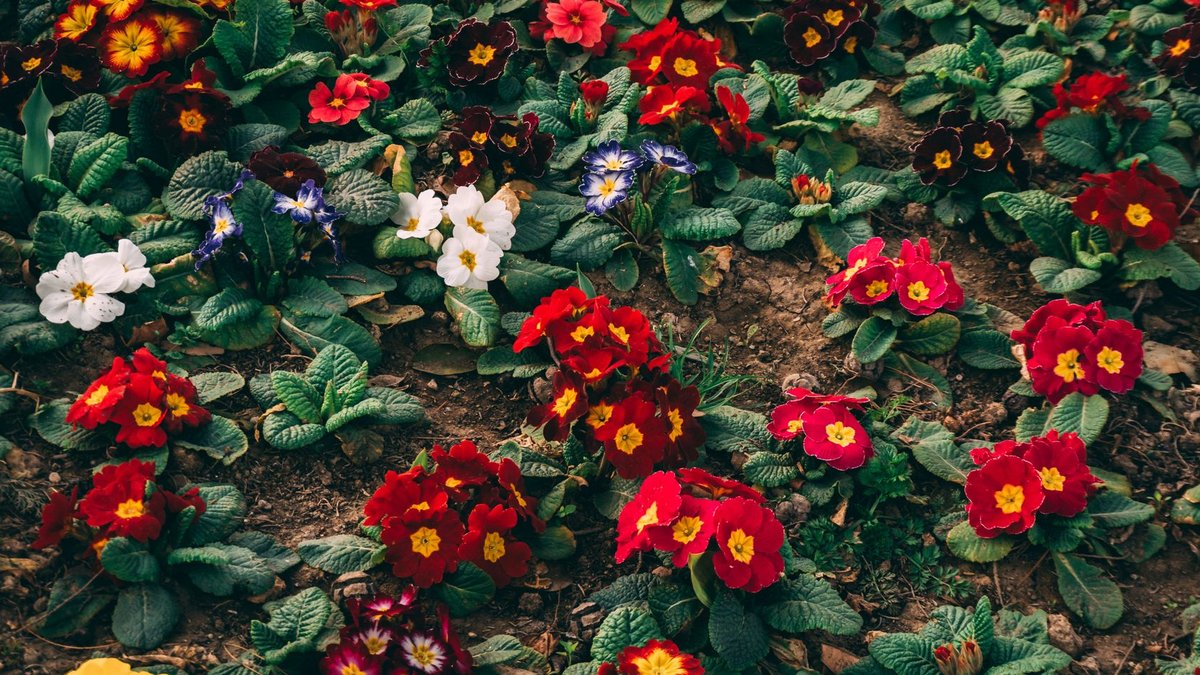
Primroses and their relatives in the Primula family offer some of the earliest color of the gardening year. The sight of wild primroses flowering in the countryside signals spring’s arrival, their pale yellow blooms clustering under hedgerows and offering early nectar for bees. Garden varieties have expanded this palette considerably, with hundreds of colored hybrids now available alongside the native species.
Common Primrose and Hybrids
The common primrose (Primula vulgaris) works well along border edges, though hybrid varieties now offer expanded color options. Bedding plants suit early-season containers, with selections ranging from bold primary hues to softer pinks and purples. Newer introductions like the Belarina and Primlet Series produce rosebud-like blooms reminiscent of double auriculas but simpler to cultivate. The Jupiter Series provides bi-colored options featuring contrasting centers.
Gardeners preferring the wild form can select improved varieties such as ‘Envy’, which offers slightly frilled double flowers in pale yellow. Flowering from late winter through late spring, these rank among the easiest plants to grow. Semi-shaded locations prevent summer overheating, while moisture-retentive, humus-rich soil supports healthy growth. Container cultivation requires quality peat-free compost and consistent watering during active development.
Polyanthus Primulas
Polyanthus primulas represent popular bedding plants developed from crossings involving native species. These vigorous hybrids typically feature tall stems bearing multiple blooms, creating impressive displays in garden beds and containers alike.
Auriculas
Auriculas (Primula auricula) occupy a special niche among Primula enthusiasts, prized for their unique floral structure and often striking color combinations. The blooms feature a distinctive central eye surrounded by mealy-textured petals. Alpine auriculas display clear colors without white powdering, while show varieties often exhibit this farina coating as a prized characteristic.
Related: Modern Farmhouse Style Updates Country Living
These plants demand excellent drainage and benefit from vertical planting angles that shed rain from the central rosette. Traditional cultivation places auriculas in clay pots with gritty compost, allowing precise control over moisture levels. Despite their reputation for requiring specific care, established plants prove surprisingly resilient in appropriate conditions.
Candelabra Primulas
Candelabra primulas add vertical interest to damp garden areas through their tiered flower arrangement. Species like Primula japonica produce successive flower rings climbing tall stems. These moisture-loving plants thrive beside ponds, streams, or in consistently damp soil conditions.
Growing Tips
Most Primula species share preferences for humus-rich soil that maintains moisture without waterlogging. Many naturalize successfully in woodland settings or along north-facing borders where summer temperatures remain moderate. Mulching with leaf mold or compost helps retain soil moisture while providing nutrients.
Propagation Methods
Seed propagation suits species and less complex hybrids, though named varieties may not come true from saved seed. Fresh seed germinates readily when surface-sown on moist compost and maintained at moderate temperatures.




Leave a Reply